Saffron: Nature's Red Gold

Iran is home to one of the world’s oldest, richest and most influential civilizations in the history of the world, namely the Persian empire. The history of Iran was further enriched when it became the fusion and the melting pot of the spirituality of the Islamic civilization and the Persian acumen in government, arts and literature. Due to its unique location, this part of the world served as a cultural hub and a true bridge between the East and the West. In Iran lies what was once one of the worlds’ richest organic cultural exchange programs, namely the “Silk Road”. This rich history took place long before the dark ages engulfed Europe, and certainly well before the Western Europeans arrived to colonize the Americas. Iran is also home to 29 sites inscribed on UNESCO’s World Heritage List, some dating back to 63,000 B.C.
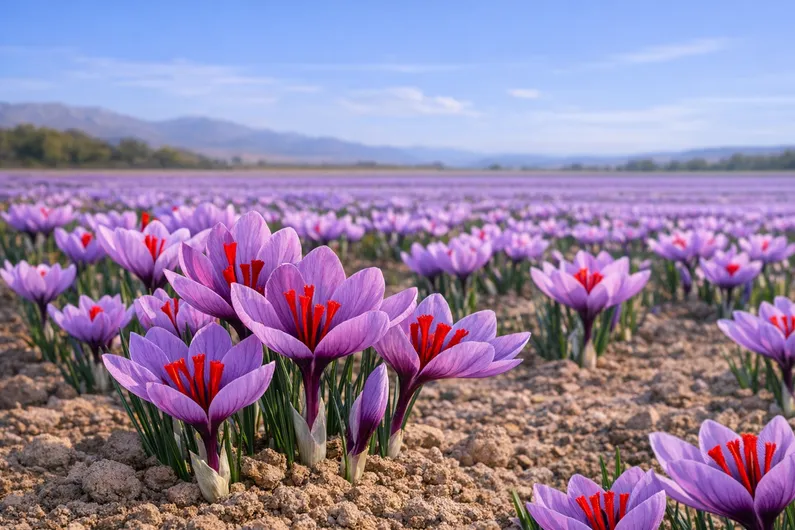
In this rich tradition, there are culinary and agricultural practices that passed the test of protracted times since antiquity and were weaved into the cultural fabrics, some highly preserved until this day. The cultivation and use of Saffron is one of those fascinating practices, Iran being the world’s largest producer of this wonderous plant, grown mostly in the Khorasan province. The purple Saffron flower (scientific name: Crocus sativus) has a crimson red stigma in the center which is harvested by hand to give us the “Saffron Spice”. Interestingly, it is also known as the “Sunshine Spice” due to its traditional and folk use to alleviate symptoms of depression and anxiety. Modern scientific research on this plant helped provide the scientific underpinning for this practice and now we know that its therapeutic effects are primarily attributed to bioactive compounds like crocin, crocetin, and safranal.
Let us review some of the current scientific evidence supporting the use of Saffron in the field of mental health.
Numerous randomized controlled trials (RCTs) (these are studies where participants don’t know what exactly they are taking as a treatment, sometimes placebo) have demonstrated that a daily dose of 30 mg of saffron extract is significantly more effective than a placebo for treating mild-to-moderate depression (Hausenblas et al., 2013). A meta-analysis (these are big studies that crunch big data into a summary) published in the Journal of Psychopharmacology found that Saffron’s efficacy is comparable to standard antidepressant medications, such as fluoxetine (Prozac), imipramine, and citalopram (Tóth et al., 2019). Saffron is believed to work on neurotransmitters and may inhibit the reuptake of serotonin, dopamine, and norepinephrine, similar to medications like SSRIs, or bupropion and venlafaxine (Lopresti & Drummond, 2014). Additionally, it exhibits strong antioxidant properties that protect brain cells from stress (Mousavi et al., 2015). A significant advantage of saffron is its lower risk of common antidepressant side effects such as sexual dysfunction and in fact, studies have shown it can actually improve sexual dysfunction induced by SSRIs (Kashani et al., 2013).
If you are curious about this amazing spice, you can start by introducing saffron in small amounts in your diet and see if you like its taste. It’s great to make dessert with (pies and ice-cream for example), or you can grind some and add to your tea or coffee. Saffron is more accessible and useful when it is mixed with hot water first as it gets to release its healthy nutrients that way. If you live in the Dupage County area, there are multiple international stores in Naperville that sell saffron at a relatively more affordable price. Check in with your doctor if you decide to use Saffron for medicinal purposes so you can discuss herb-medication interactions and appropriate dosing and expectations.
References:
- Abe, M., et al. (2011). “Drug-herb interactions: Saffron and its constituents.” Phytomedicine. This study discusses potential interactions between saffron and common pharmaceuticals.
- Hausenblas, H. A., et al. (2013). “Saffron (Crocus sativus L.) and major depressive disorder: a meta-analysis of randomized clinical trials.” Journal of Integrative Medicine.
- Kashani, L., et al. (2013). “Saffron for treatment of fluoxetine-induced sexual dysfunction in women: randomized double-blind placebo-controlled study.” Human Psychopharmacology.
- Lopresti, A. L., & Drummond, P. D. (2014). “Saffron (Crocus sativus) for depression: a systematic review of clinical studies and examination of underlying biological mechanisms.” Human Psychopharmacology.
- Mousavi, B., et al. (2015). “The effects of saffron (Crocus sativus) on depression and anxiety: A systematic review.” Complementary Therapies in Medicine.
- Tóth, B., et al. (2019). “The efficacy of saffron in the treatment of mild-to-moderate depression: A meta-analysis.” Journal of Psychopharmacology.